|
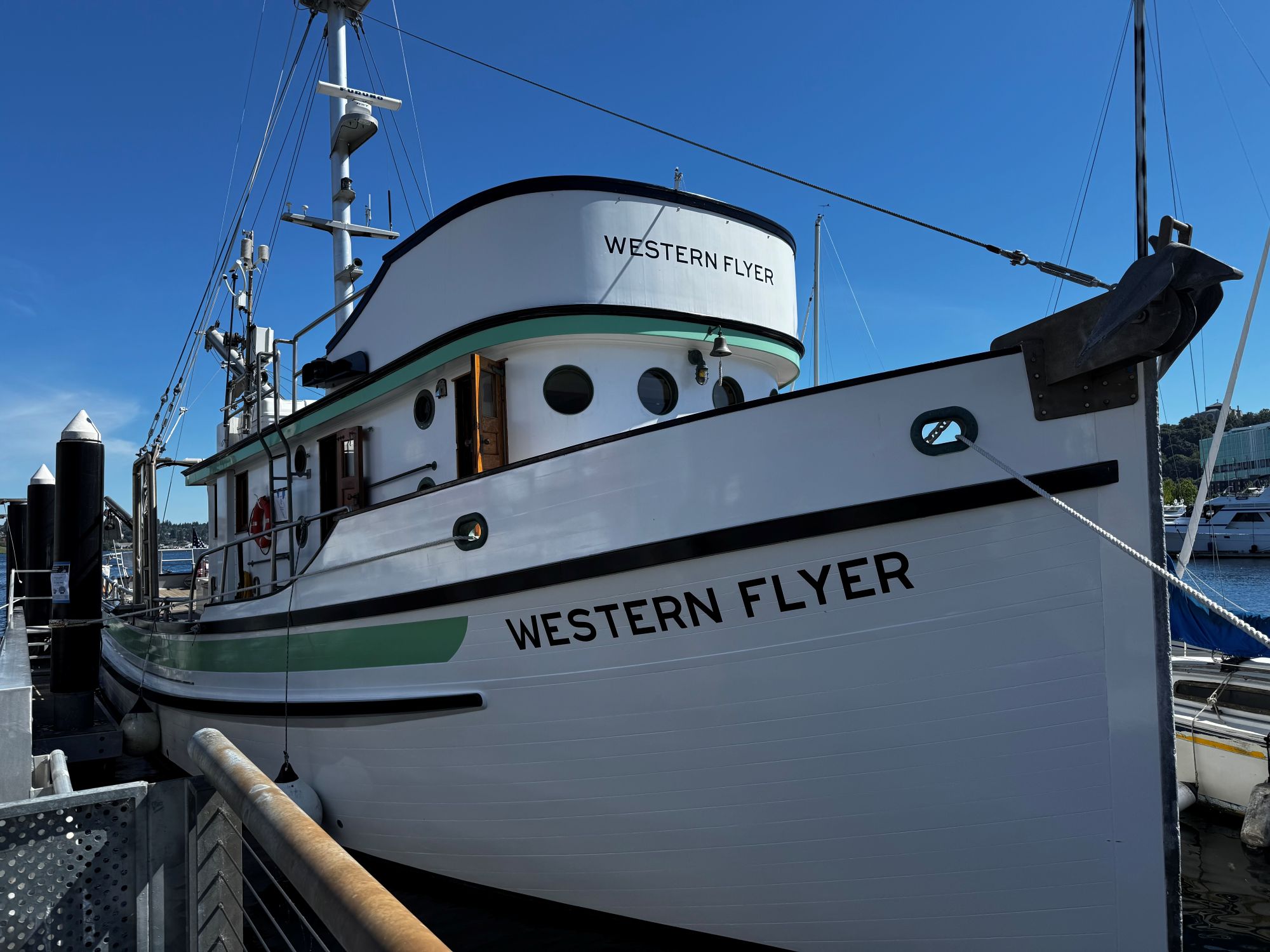
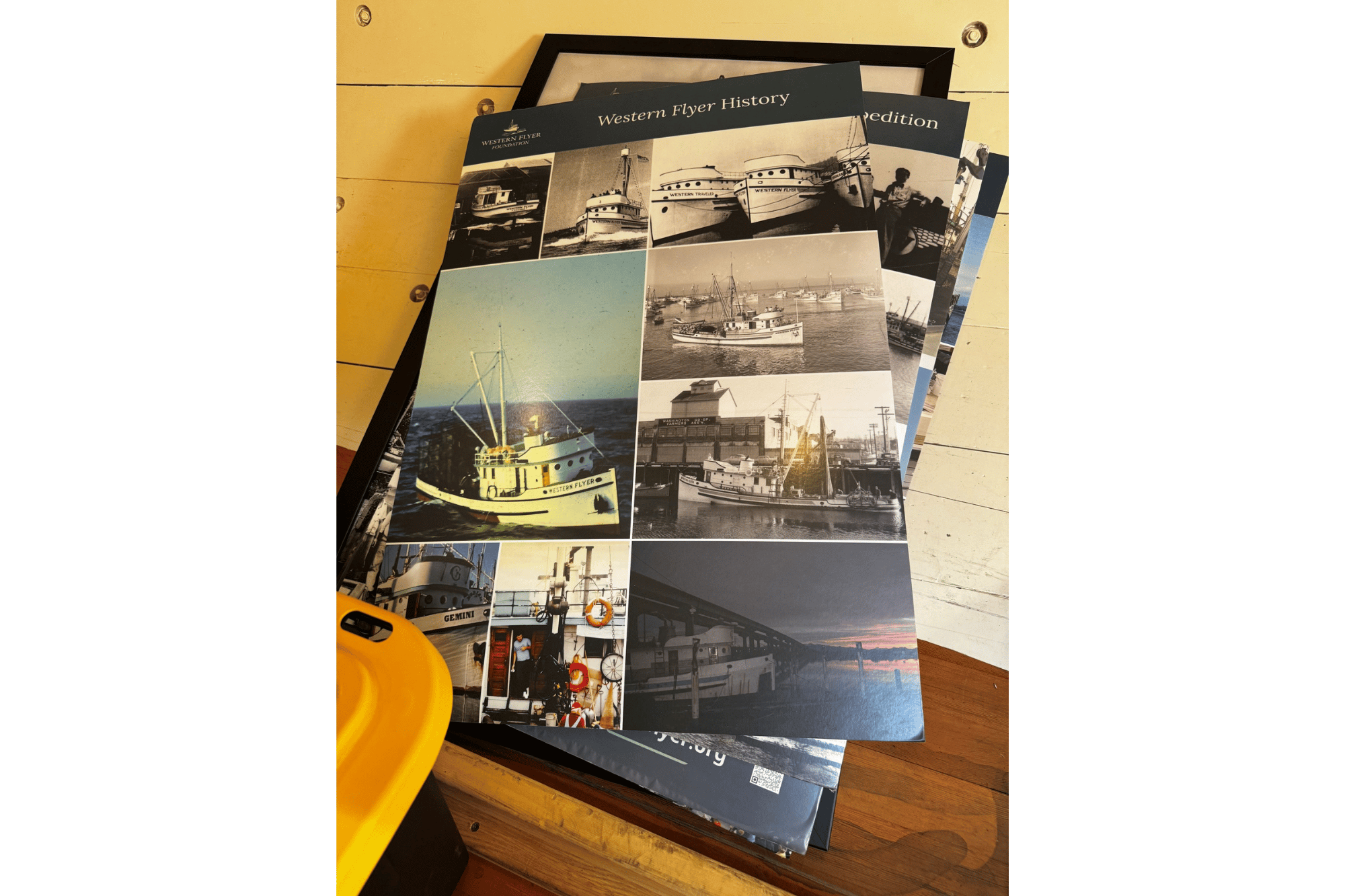
The historic Western Flyer was docked in Seattle Lake Union.The vessel's history is captured in images from its colorful past. (Knute Berger)
|
|
|
The boat John Steinbeck made famous
|
|
Last week a remarkable vessel was in town: the historic Western Flyer, a rescued and refurbished onetime purse seiner built in Tacoma, that famously cruised the Sea of Cortez in Mexico with author John Steinbeck and marine biologist Edward Ricketts aboard. That cruise to study sea life in 1940 was recorded in Steinbeck’s Log from the Sea of Cortez, a classic book of travel and marine science that documented their six-week journey and is considered a pioneering work in the history of marine ecology.
Docked at the Center for Wooden Boats on Lake Union last weekend, the Western Flyer once sailed the Pacific Coast exploring and fishing. It was birthed in Salish Sea waters. Built in 1937 in Tacoma, the vessel has lived many lives — fishing for sardines, salmon and perch under various owners from Mexico to Alaska until derelict, rediscovered and revived with a some $6-million renovation. It is now a seaworthy and well-outfitted research vessel which takes marine biology students from colleges and universities to sea as a floating classroom. It was refurbished in Port Townsend and its home these days is in Monterey Bay in California.
|
|
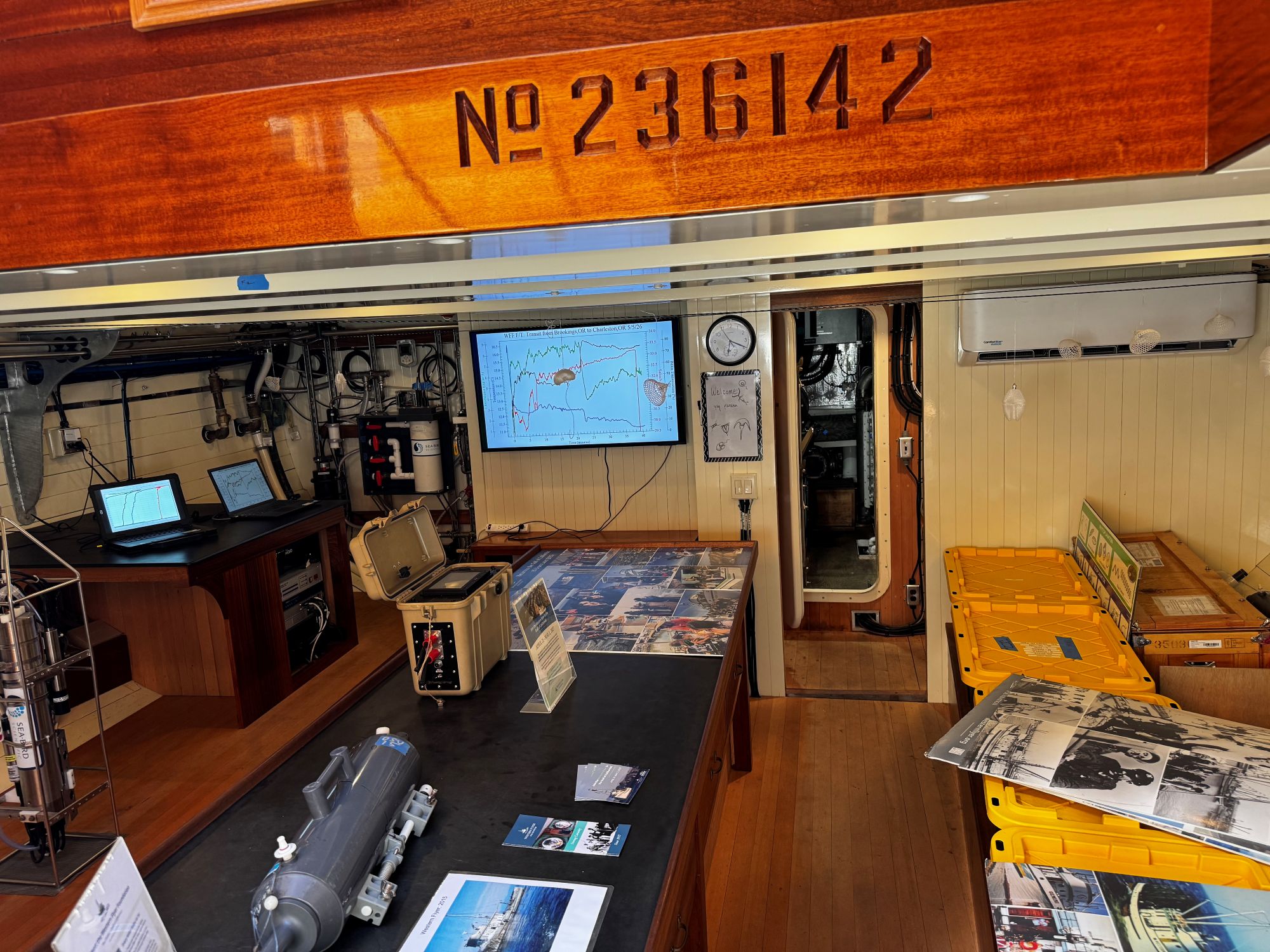
The ship’s hold, which at one time carried catches of fish, has been converted into a marine biology classroom. (Knute Berger)
|
|
|
I was invited aboard for a tour and spent time talking with her current captain, Paul Tate, a seaman and marine biologist who attended the University of Washington and fished in Alaska. We were joined by a cadre of local volunteers who came aboard to help with public tours while she was in port. They too were marine biologists who study salmon, shellfish and other marine life and have UW connections. It was a reunion of sorts for them to see this classic vessel revived with a purpose and beautifully restored.
I asked what it was that made the Westen Flyer so iconic. One reason is that marine biologist Ed Ricketts pioneered research of sea life in the tidepools of the Pacific Northwest and produced a book that was a must on every Salish Sea bookshelf, Between Pacific Tides. It was the standard reference to the region’s marine life in my childhood. It contained early research that popularized the concept of ecosystems and how they support life forms specific to their environments — an idea we take for granted now, but new even in the 1930s and ‘40s. Ricketts was based in Monterey and became a friend of Steinbeck’s. He served as a role model for the character “Doc” in Steinbeck's novel Cannery Row.
|
|
Fans of the boat point to its flying bridge, its classic look and lines as an archetype of Northwest fishing vessels of a certain era, much the way classic car buffs might talk of the contours of a 1966 Ford Mustang. But the draw is deeper: the common purpose of better understanding our world and how the ocean is changing, and learning more about the life within the sea. The Western Flyer is a serious research and teaching platform, the purpose to which Ricketts and Steinbeck put it 86 years ago on the Baja jaunt. It brought ecological ideas and reflections on nature to a broader public.
The Log from the Sea of Cortez has inspired generations of sea lovers, naturalists and biologists. This included John Gregg, founder of the Western Flyer Foundation which led the vessel’s recovery and restoration — it actually sank at one point, but you’d never know it now. He told me that as a 10-year-old he read Steinbeck’s book and thought: fishing and exploring on a boat? That’s the life for me. It inspired him to be become a deep-sea geologist and fueled his passion for saving the Flyer.
Captain Tate encouraged me to read chapter 16 of Steinbeck’s book — written, by the way, with the help of Ricketts. I did. In that chapter Ricketts and Steinbeck capture sea creatures that were then not widely known — some so fragile they could not be preserved. It is almost like the pair are space explorers encountering alien life forms, which basically they are. In the chapter, Ricketts and Steinbeck meet some Mexican men who invite them to join in a “hunt” for bighorn sheep in the mountains. They travel on mules into the hills with no real intent to kill anything — they return only with proof that the bighorns do live there: a pocketful of bighorn poop.
The chapter also includes a reflection on science and knowing. Steinbeck writes, “The process of gathering knowledge does not lead to knowing. A child’s world spreads only a little beyond his understanding while a great scientist thrusts outward immeasurably. An answer is invariably the parent of a great family of new questions.” The unknowns of the sea are many. It’s easy to understand why the book is an inspiration to many. John Gregg, even in the era of early space travel and the New Frontier, was a boy who saw that adventure and the unknown could be found close to home, a truth the Western Flyer embodies.
|
|
Searching for Lake Union wrecks
|
|
David Williams, historian and naturalist, has a really interesting piece on his Street Smart Naturalist Substack newsletter regarding the search for and documenting of sunken vessels, barges, sailboats, yachts and other assorted objects in Seattle’s Lake Union.
The lake was created by the retreat of the Cordilleran ice sheet, and a melting hunk of ice in its wake resulted in the bowl-shaped lake that sits in the heart of Seattle between Queen Anne and Capitol Hills. It has evolved from the site of Indigenous dwellings and a key point in the crossing and portaging of canoes from Lake Washington to Elliott Bay, then was developed, partly filled and industrialized for shipbuilding and marine maintenance, not to mention Boeing’s early aircraft building phase. It acted as a major conduit, via the ship canal and locks, connecting Lake Washington and Puget Sound. It makes sense that samples of its maritime history are to be found on its bottom.
Williams went out with a crew that is attempting to identify the wreckage on underwater with a remote operating vehicle to capture images and footage of where many vessels sank and document their location. One highlight, Williams says, was finding the Kahlenberg, a 50-foot-long wooden ship built in 1913. It was formerly a U.S. Navy tender. It later served as a private tender for a maritime company. Williams has written about the history of Seattle’s ship canal, the washing away of hills during the city’s regrades, and places in the city where wildlife and ancient geology can be found. It’s fun to read about discovering unknown or little-known shipwrecks in our midst. He has a knack for searching out such gems.
|
|
|
Moss[feed]back
|
|
|
Paul Dorpart’s trivia legacy
|
|
One of the things that you didn’t include in your summary of Paul Dorpat’s work was the book Building Washington that he wrote for the American Public Works Association (APWA) Washington Chapter as a Centennial project. As you noted, Paul could find interesting little-known pieces of history to share in his work. I run a trivia contest for the APWA WA Chapter, and I’ve come up with 200 questions using Dorpat’s book for material.
— John Ostrowski Vancouver USA
|
|
Paul and ‘60s light show history
|
|
Hi Knute,
I'm sorry to hear of Paul's passing. He was such a force of nature in Seattle's recent history that it's hard to believe he is really gone. And of course, his spirit is still very much alive in all the writing, archives, and information he produced and generously shared.
He was a real mentor to me in the early 2000s when I started to research the Seattle chapter of Experiments in Art and Technology (E.A.T.). He introduced me to the folks who founded two lightshows in Seattle: Union Light Company and Lux Sit and Dance. He and I, along with some of those folks, did a presentation about West Coast light shows at MoPop in the early 2000s that he recorded. I wrote about all this in an essay on Historylink.
As a Humanities scholar (I even have a PhD!), I'm now working with a documentary filmmaker and Vanderbilt professor named John Warren, who is producing a documentary about the origins of psychedelic lightshows on the West Coast. He has already gotten a letter from Cascade PBS to air it once it is completed, and all the historical findings I wrote about are because Paul Dorpat helped me with original sources and introductions to the lightshow founders and their histories. It's ironic that I just heard from John last week, and Paul died on my birthday, May 27th.
I don't know if any of this is of interest to you or Cascade PBS, but I just wanted you to know that Paul's legacy continues to grow far beyond Seattle. I can send you a link to the trailer for the lightshow doc.
John is now finalizing a large NEH grant that would fund the completion of the documentary, which is called “Over Head: The Illuminated History of the Psychedelic Light Show.”
If there is a public celebration of Paul's life, I hope to be there.
--Robin Oppenheimer
|
|
Robin: Super interesting. I did not know about those outfits, but I saw plenty of light shows at Eagles auditorium and elsewhere. My cousin once had a light show company, the Lighter Than Air Corps, back in the ‘60s. Thanks for writing about it and sharing this with us. Love that Paul was a mentor on so many different subjects for people.
|
|
The unrecognized Duwamish
|
|
Knute: Thanks for the article Unrecognized: The Duwamish Tribe.
This is a story that needs to be told, in particular the resistance to federal recognition offered by other tribes in the region. Each time I see an advertisement with the tagline, “Muckleshoot: Seattle's host tribe,” I'm left with the feeling that the Duwamish are Seattle's unrecognized host tribe.
Regardless, thanks for telling this story.
--Chris J. Bellevue
|
|
New Columbia River doc nears premiere
|
|
Greetings Friends and Supporters,
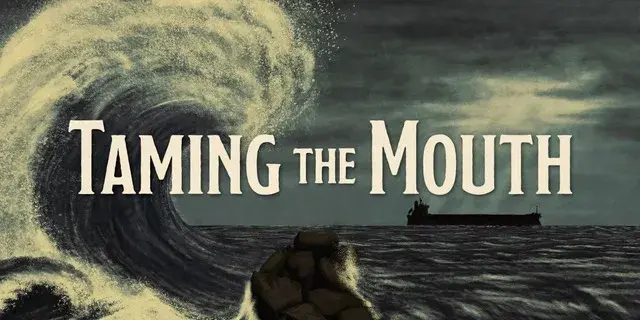
What an incredible journey it has been. We’re thrilled to share that Taming the Mouth is officially finished! The finish line is finally in sight, and we couldn’t be more excited.
One of the final enhancements we made was upgrading the film’s audio to a 5.1 surround sound mix, creating a more immersive experience for viewers. Whether you watch the film in a theater or on a modern home theater system, you'll be able to experience the power of the Columbia River and its jetties as they were meant to be heard.
We’re now in the process of delivering the completed film and all supporting materials — including the trailer, artwork, and marketing assets — to our distributor while finalizing our release strategy. Film festival submissions are already underway, and we look forward to sharing this remarkable story with audiences across the country while raising awareness about one of the Pacific Northwest's greatest engineering achievements.
We’re also proud to announce that Taming the Mouth has been awarded a Silver Telly Award at the 47th Annual Telly Awards in the Documentary Film category! It’s an honor to receive this recognition and a testament to the hard work of everyone who helped bring this project to life.
While we’re still awaiting an official release date from our distributor, we’re optimistic that the film will be available online in early to mid-August. We have more exciting announcements on the horizon and can't wait to share them with you.
Watch for our Taming the Mouth Premiere….[L]et us know if you are interested in joining us on Saturday, July 25 for this exciting event in Astoria at the Liberty Theater. Also note that we just updated our trailer and our website so please take another look.
Thank you again for your support, encouragement, and belief in this project. You helped make this film possible, and we're excited for you to finally experience the finished journey.
Kind Regards, Joe Foss, Gary Kobes, & Jeff Holt Executive Producers Taming the Mouth Project LLC
|
|
Don’t forget to send notes, feedback, questions, memories and ramblings to the Mossback Mailbag ([email protected]) for a chance to be included in an upcoming Den.
|
|
|
|
|
by Knute Berger & Sara Bernard
|
|
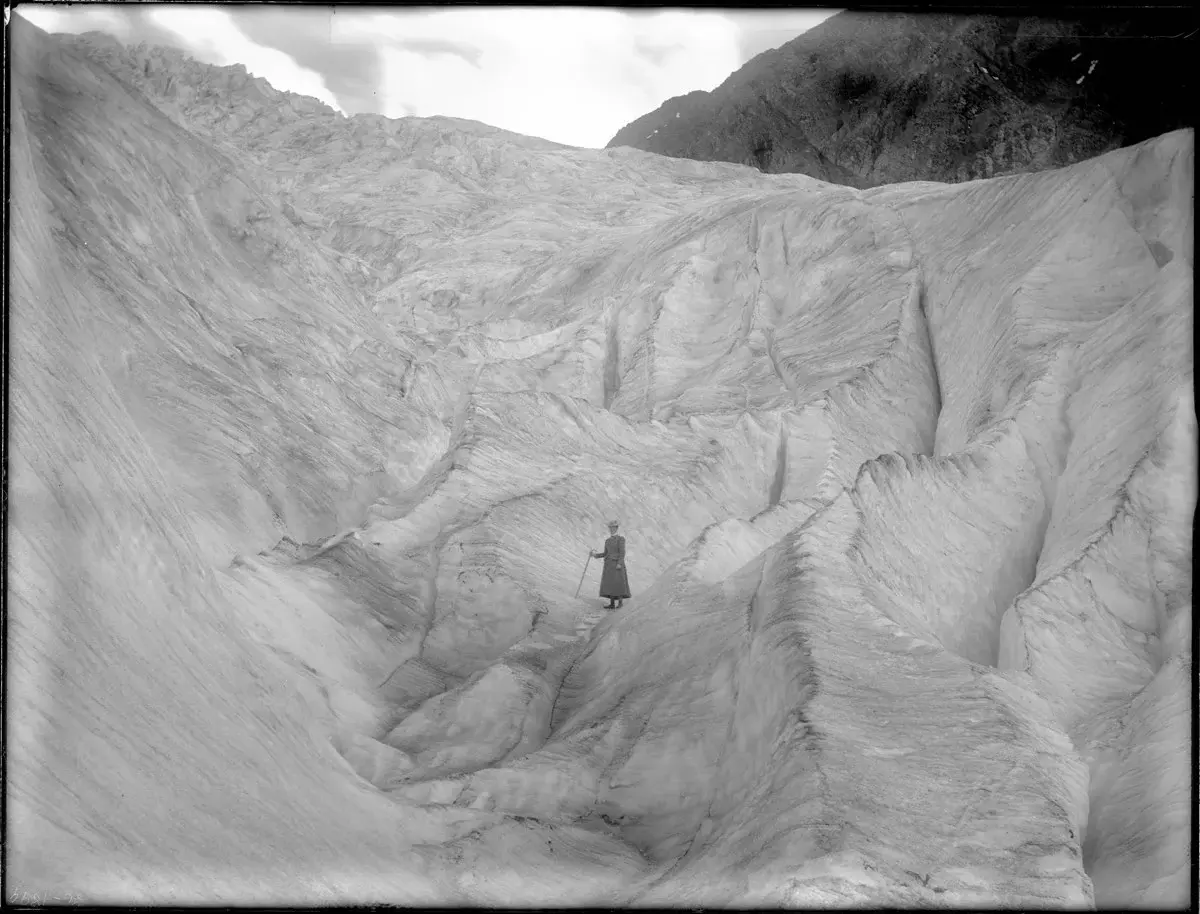
Northwest glaciers are disappearing at an alarming rate. Knute Berger shares the story of the woman who began documenting their retreat in the late 19th century. Listen now
|
|
|
|
|
|
by Knute Berger & Sara Bernard
|
|
Chief Seattle's daughter was a key figure in Seattle’s history. Knute Berger and three members of the Duwamish Tribe share her story. Listen now
|
|
|
|
|
|
by Knute Berger & Sara Bernard
|
|
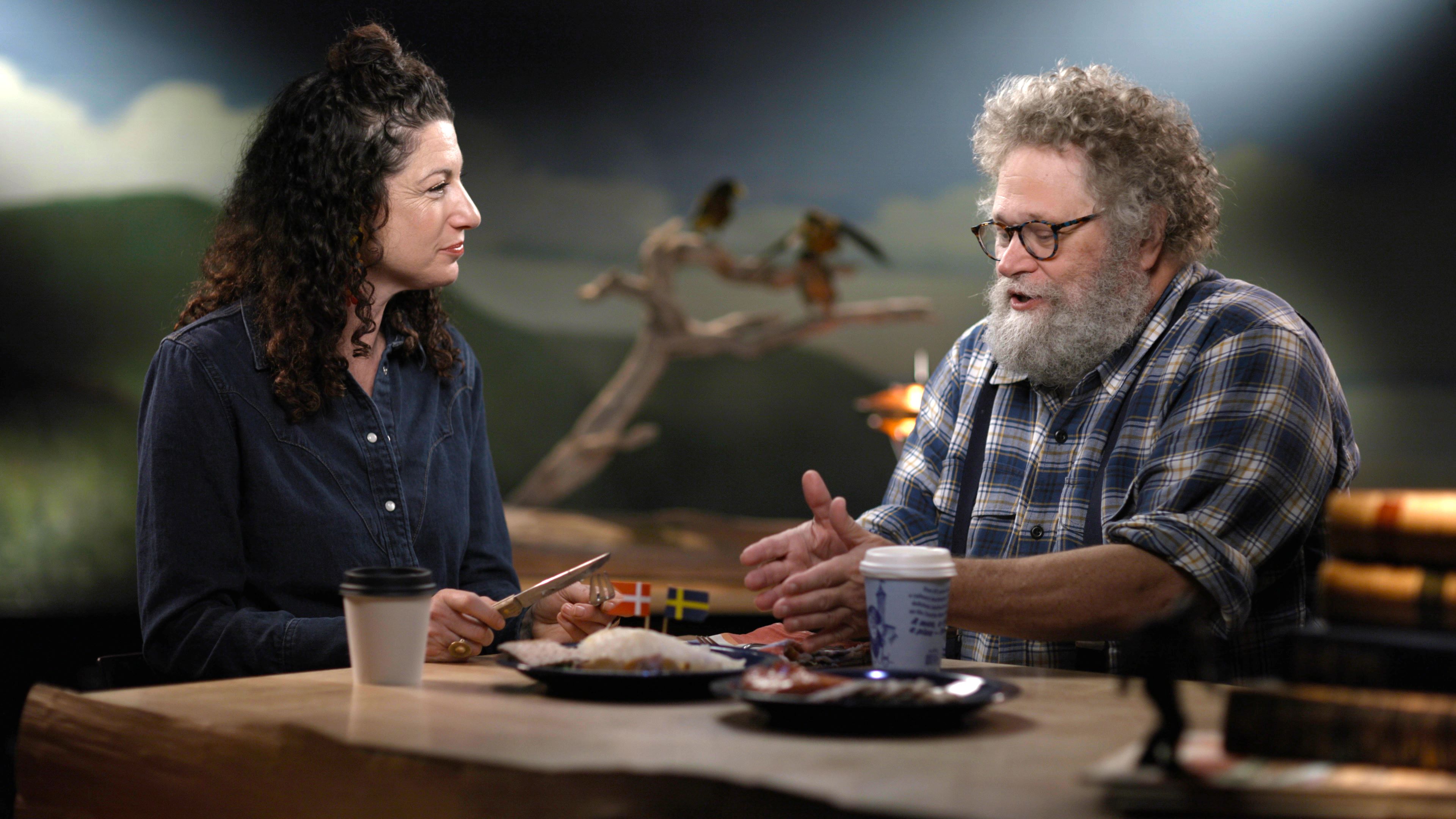
What are Seattle’s most iconic foods? There's a history to that! Mossback co-hosts Knute Berger and Stephen Hegg delve into the past and present of the Seattle food scene with Cascade PBS’s resident foodie Rachel Belle, host of the video series The Nosh and the podcast Your Last Meal. Listen now
|
|
|
|
|
|
by Knute Berger & Sara Bernard
|
|
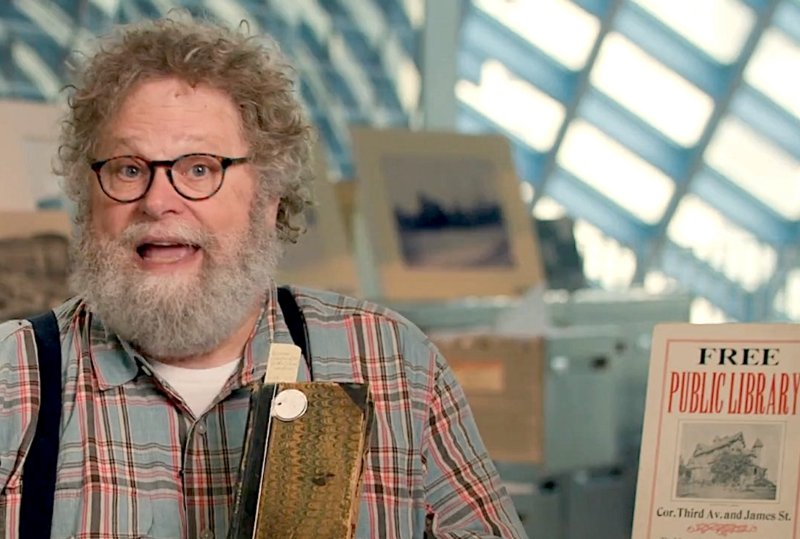
Today, Seattle is a UNESCO City of Literature – and it’s been a literary city since its founding. In fact, the first local library was created even before the city was officially incorporated. Listen now
|
|
|
|
|
|
by Knute Berger & Sara Bernard
|
|
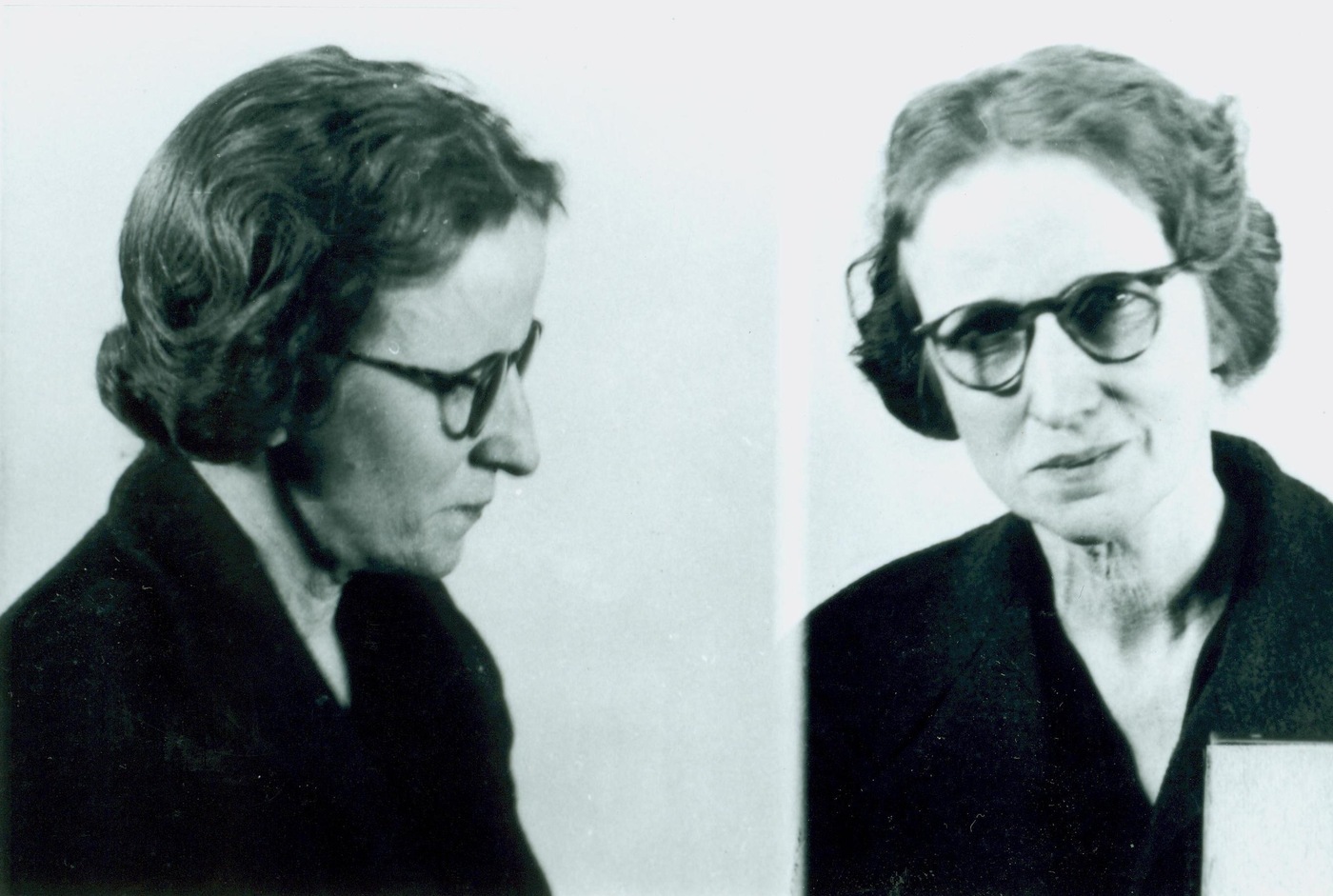
One of the oddest cases of World War II espionage involved a woman, Velvalee Dickinson, who spied on Northwest shipyards for the Japanese. How did she do it? By writing coded letters about dolls. Listen now
|
|
|
|
|
|
by Knute Berger & Sara Bernard
|
|
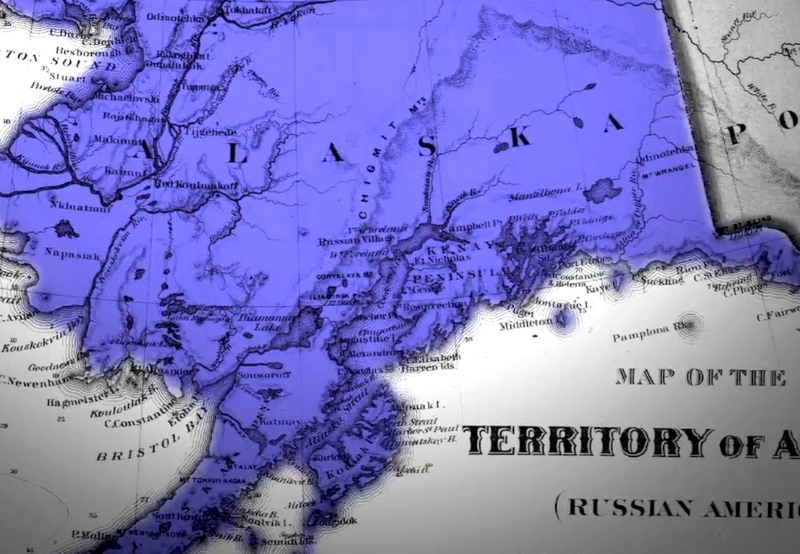
Why did the U.S. buy Alaska from Russia? It wasn’t for gold or fur, it turns out. It was for fish. And it was a politician from the Washington Territory who lobbied the hardest for the purchase. Listen now
|
|
|
|
|
|
by Knute Berger & Sara Bernard
|
|
Science is still searching for the origin of a Washington prairie full of hills. Knute Berger digs into some theories. Listen now
|
|
|
|
|
|
by Knute Berger & Sara Bernard
|
|
The Mossback’s Northwest video series launched its 11th season last fall, covering topics ranging from the mystery of the Mima Mounds to World War II espionage to Seattle’s Princess Angeline. Listen now
|
|
|

|
|
|
by Patricia Murphy & Caroline Chamberlain Gomez
|
|
Seattle is in earthquake country, and our most recent big reminder of that came 25 years ago this Saturday, when the Nisqually Earthquake shook the Puget Sound region. Listen now
|
|
|
|
|
|
by Paris Jackson, Shannen Ortale & Venice Buhain
|
|
This week, The Newsfeed team attends the memorial of a celebrated Black historian, revisits King County's naming and reads the Mother of Afrofuturism. Watch now
|
|
|
|
Mossback’s Northwest Season 11
|
|
|
|
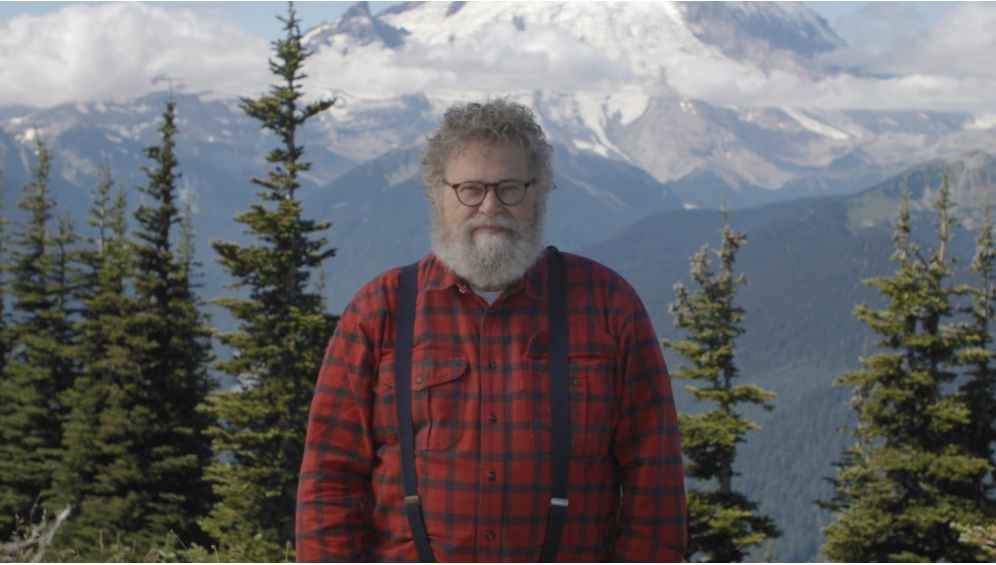
One woman's devotion to documenting these huge ice formations in the late 1800s sheds light on what the PNW will look like when they are gone. Watch now
|
|
|
|
|
|
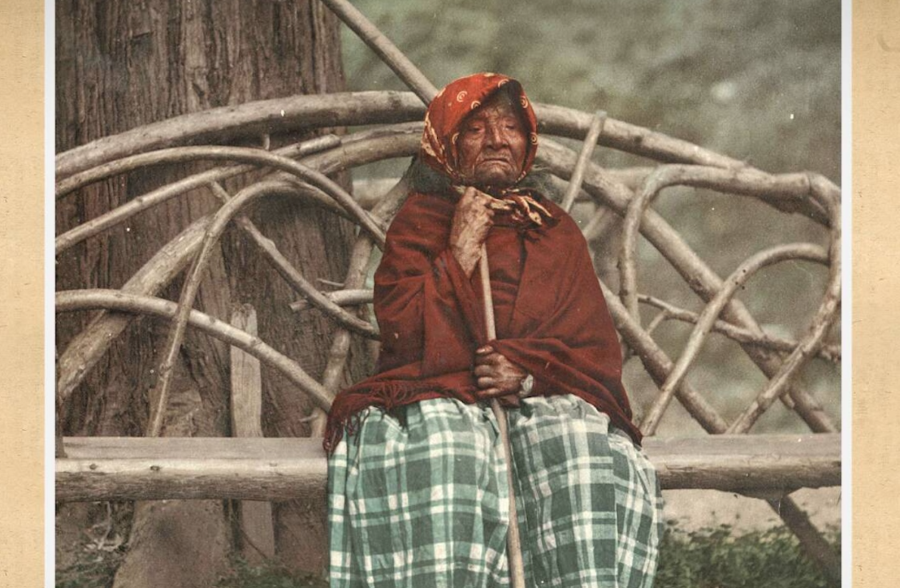
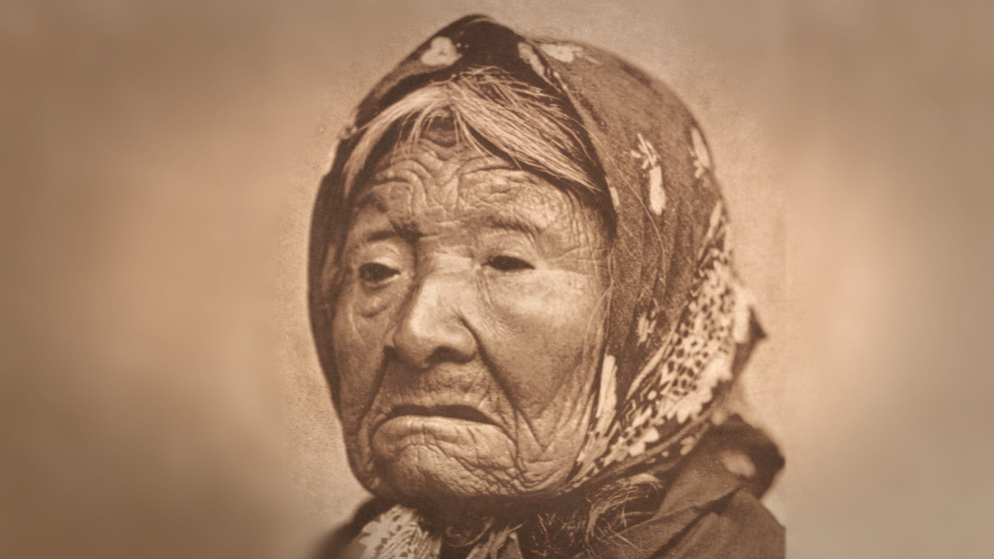
Chief Seattle’s daughter Kikisoblu, dubbed Princess Angeline by settlers, became a symbol for a rapidly changing city and its fraught past. Watch now
|
|
|
|
|
|
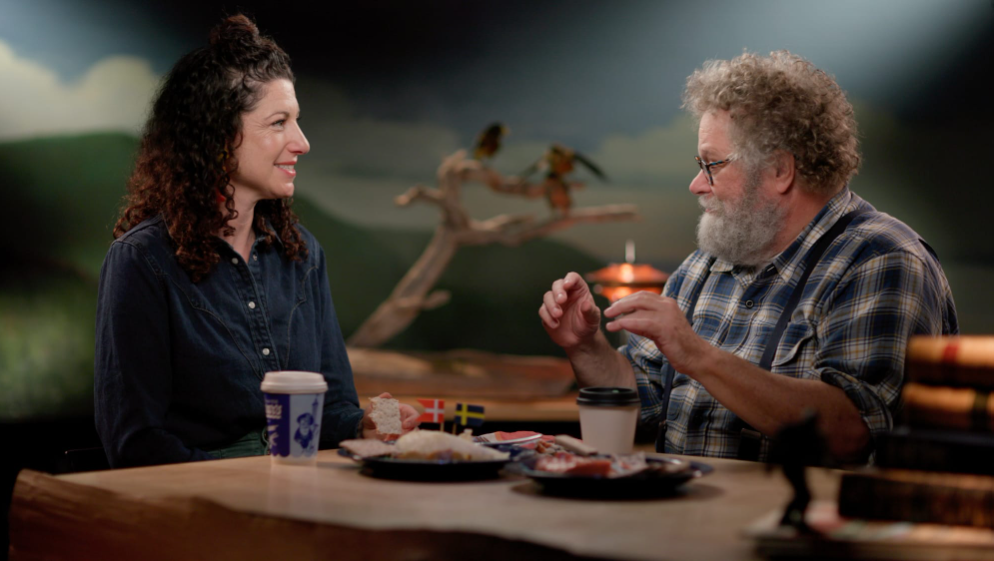
How have local foods evolved? From teriyaki to clam nectar, Rachel Belle and Knute Berger take a tour through the city's culinary history. Watch now
|
|
|
|
|
|
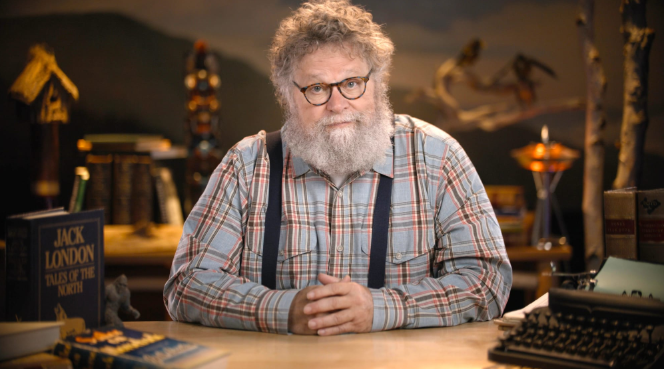
Henry Yesler's sawmill, and his unconventional marriage, helped make the city a leader in literature and gave us one of the great 20th century writers. Watch now
|
|
|
|
|
|
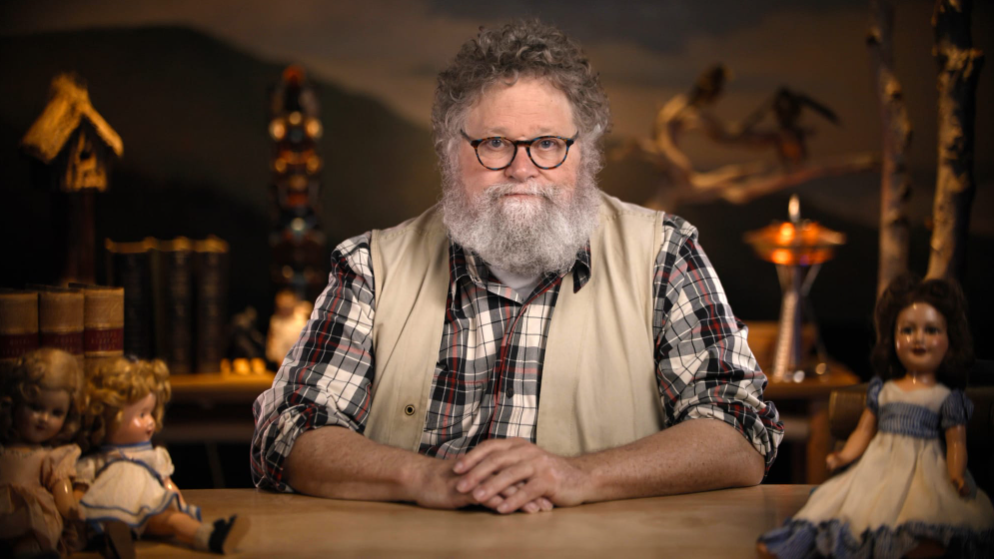
One of the 20th century’s most bizarre espionage cases centered on a turncoat doll dealer and America’s first female cryptanalyst. Watch now
|
|
|
|
|
|
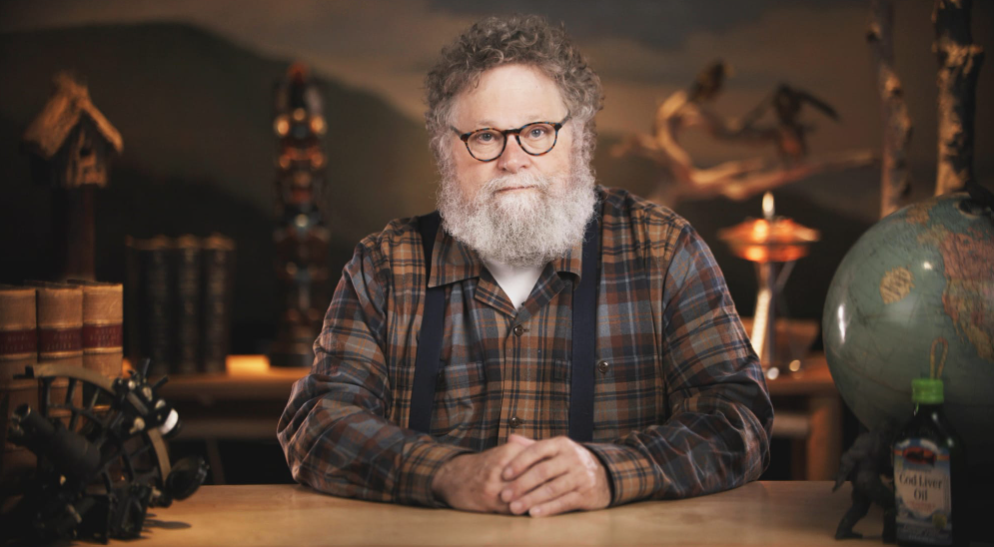
America’s 1867 purchase of Alaska from Russia was called a folly by some, but territorial legislators in Washington knew it was a bargain. Watch now
|
|
|
|
|
|
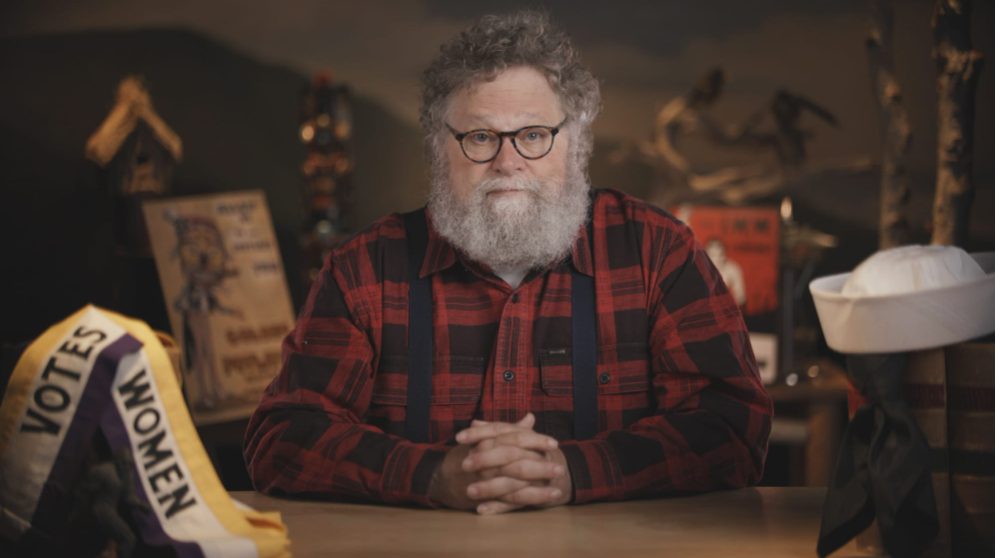
The story of how a summer festival erupted into violence resonates with present-day struggles over free speech and freedom of the press. Watch now
|
|
|
|
|
|
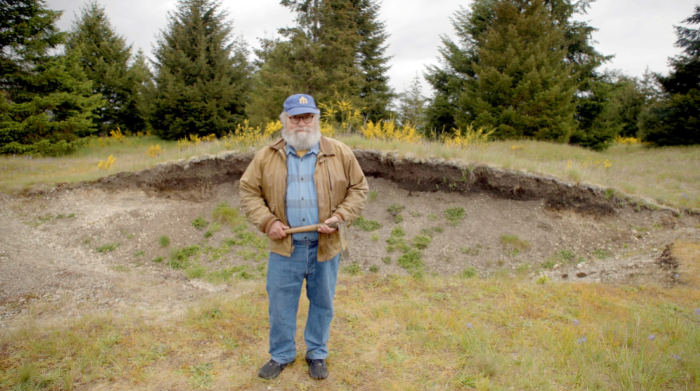
What created those bumps that cover the prairie just south of Olympia? Earthquakes? Floods? Giant gophers? Knute Berger is on the case. Watch now
|
|
|
|
Download our free Cascade PBS app and stream anywhere!
|
|
|
|
Connect with us on all your social media!
|
|
|
|
Experience the widest variety of programs that entertain, inform and connect you with your community.
|
|
|
|
|
You received this message because you are opted in to receive Cascade PBS Mossback Den Newsletter.
Update email preferences | Unsubscribe | Privacy Policy
Did someone forward this to you? Explore all our email newsletters and subscribe here.
Cascade Public Media
316 Broadway, Seattle, WA 98122
[email protected]
800-937-5287
© 2026 Cascade Public Media. All Rights Reserved. Cascade Public Media (CPM), which includes Cascade PBS, is a 501(c)(3) nonprofit organization. Donations to CPM are tax-deductible to the extent allowed by law.
|
|
|